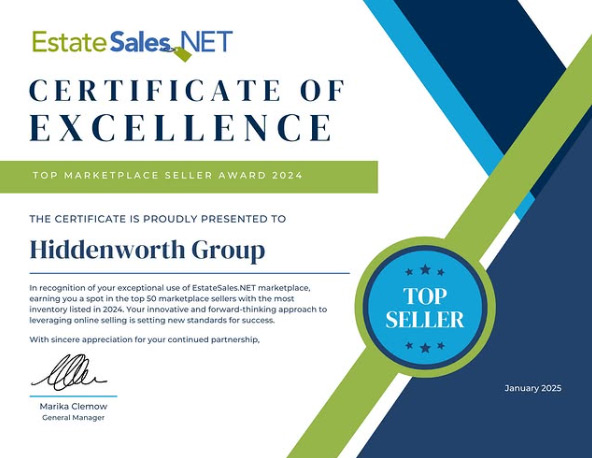


Published January 2026 | By Chris Fetcko, Hiddenworth Group
Conducting estate sales and auctions throughout the tri-state area, we’ve worked with hundreds upon hundreds of families during some of life’s most challenging transitions. Whether you’re handling a parent’s estate, downsizing to a retirement community, or managing property for relatives who’ve moved to assisted living, the process can feel overwhelming.
The good news? With proper planning and professional guidance, estate liquidations can be straightforward, dignified, and financially beneficial. Here are the five most important things we share with every client during initial consultations—insights that can save you time, money, and stress.
1. Start Earlier Than You Think
The single most common mistake we see is people waiting too long to contact us.
Most people assume a sale is something you arrange a week or two before you need a property cleared. In reality, successful sales benefit from 4-6 weeks of advance planning.
Why this timeline matters:
Professional estate sales involve multiple stages that take time:
- Initial assessment: We need to walk through the property, identify items of value, and develop a sales strategy
- Research: Valuable items require authentication, provenance research, and appropriate pricing
- Staging and organization: We set up the home to showcase items effectively and facilitate smooth buyer flow
- Photography and cataloging: Online auctions require professional photos and detailed descriptions
- Marketing: We promote sales through our website, social media, email lists, and specialized collector networks
- Specialized buyer outreach: High-value items may require contacting specific collectors or auction houses
Timeline example:
Let’s say you need a property cleared by March 1st because it’s going on the market. Here’s what an ideal timeline looks like:
- Early January: Contact us for initial consultation
- Mid-January: We conduct property assessment and provide proposal
- Late January: Contract signed, research and preparation begins
- Early February: Sale staged, photographed, and marketed
- Mid-February: Sale conducted (typically a weekend)
- Late February: Property cleared, cleaned, and ready for listing
Can we do rush sales? Absolutely. When circumstances require it, we can move more quickly. However, advance planning typically yields better financial results because it allows time for proper research, marketing, and connecting specialized items with the right buyers.
Action step: If you know an estate liquidation is in your future—even if the timeline is uncertain—contact us for an initial conversation. There’s no obligation, and early planning gives you options and peace of mind.
2. Don’t Discard Anything Before We Meet
We’ve seen valuable and serviceable items rescued from dumpsters more times than we can count.
Family members understandably want to help by “cleaning out junk” before the professionals arrive. Unfortunately, this well-intentioned effort frequently results in valuable items being discarded.
Real examples from our sales:
- The “junk drawer” sterling silver: A client’s adult children had sorted kitchen drawers, placing numerous items in boxes headed for donation. We discovered the “random silverware” was actually sterling silver flatware worth several thousand dollars. The pieces were tarnished and mixed with stainless steel, so they weren’t obviously valuable to someone unfamiliar with hallmarks.
- Art in the attic: What appeared to be amateur paintings stored in an attic turned out to be work by a regional artist whose pieces now command serious collector interest. The family had planned to donate them to a thrift store.
- Vintage toys in storage bins: Multiple clients have nearly discarded original boxes of action figures, Hot Wheels, and other toys from the 1970s-80s, unaware that mint-condition vintage toys can be worth hundreds or even thousands of dollars.
Why this happens:
Several factors lead to valuable items being overlooked:
- Familiarity breeds contempt: Items you’ve seen your whole life seem ordinary, even if they’re rare or valuable
- Condition assumptions: People assume damaged, tarnished, or worn items have no value, but collectors often seek pieces in “honest” original condition
- Generational differences: What seemed worthless to your parents’ generation might be highly collectible now
- Hidden value: Valuable items are often mixed with ordinary goods or stored in unexpected places
Our policy: We ask clients not to discard anything before our initial assessment. We’ll walk through the entire property—including attics, basements, garages, and outbuildings—and identify what has value and what doesn’t. Then you can make informed decisions about disposal.
Action step: Before our consultation, there is no need to arrange things a certain way, just don’t throw anything away. We’ll sort valuable from non-valuable during our walkthrough.
3. Estate Sales Aren’t Just for Antiques
One of the biggest misconceptions about estate sales is that they’re only appropriate for homes filled with antiques, fine art, and valuable collectibles.
The reality is quite different. Successful estate sales include everything from fine china to garden tools, and everyday household items often make up the bulk of sales revenue.
What actually sells at estate sales:
- Kitchen items: Cookware, small appliances, dishes, glassware, utensils, pantry organizers
- Furniture: Contemporary pieces, solid wood furniture regardless of style, quality mattresses and bedroom sets, outdoor furniture
- Tools: Hand tools, power tools, workshop equipment, gardening tools
- Linens and textiles: Towels, bedding, curtains, fabric remnants
- Books: Not just rare editions—popular fiction, cookbooks, reference books, children’s books all find buyers
- Electronics: Working TVs, computers, stereo equipment, speakers
- Sporting goods: Bicycles, camping equipment, fishing gear, exercise equipment
- Home décor: Lamps, mirrors, picture frames, artificial plants, seasonal decorations
- Garage and outdoor items: Ladders, lawn equipment, plant pots, outdoor decorations
- Office supplies: Filing cabinets, desk accessories, office furniture
- Vehicles: Classic cars, buses, vans, you name it, we’ve sold it and more often than not for more than what a dealer would offer.
- Equipment: Tractors, three point equipment, side-by-sides, farm equipment….barn stuff.
Why everyday items matter:
Estate sale buyers aren’t all collectors seeking treasures. Many are:
- Young people furnishing first apartments
- Families looking for quality items at reasonable prices
- Resellers who will clean, repair, and resell items
- People who appreciate well-made, durable goods
- Environmentally conscious buyers choosing pre-owned over new
The complete clear-out goal: Our objective is typically to clear properties as completely as possible. While we can’t sell everything, a well-run sale or auction should move 60-80% of household contents. What doesn’t sell can be donated, disposed of responsibly, or in some cases, purchased by buyers interested in “lot” purchases of remaining items.
Action step: Don’t edit the contents before we arrive based on assumptions about what we can or can’t sell. Let us assess everything and develop a comprehensive sales strategy.
4. Online Auctions Expand Your Market Exponentially

The estate sale business has been transformed by technology merging estate sales and auctions together, and this benefits sellers significantly.
Twenty years ago, estate sales attracted local buyers who saw newspaper advertisements or yard signs. Today, we use a hybrid approach that combines traditional on-site sales with online auctions, dramatically expanding your potential buyer pool. We are the only liquidation business in Erie County that conducts estate sales and auctions.
How online auctions work:
We photograph items, write brief descriptions, and list them on platforms like EstateSales.net where they’re viewed by buyers across the country—sometimes internationally. Bidding occurs online over several days, and winning bidders either arrange shipping or local pickup.
What benefits from online auctions:
- Specialized collectibles: A collection of vintage fishing lures might attract only a handful of local buyers, but online it reaches thousands of serious collectors nationwide
- Rare items: Investment-grade art, unusual antiques, or items with limited markets need broad exposure to find the right buyer
- High-value pieces: Premium items justify the effort of photographing, researching, and marketing online
- Niche interests: Whether it’s vintage electronics, specific pottery patterns, or particular types of tools, online platforms connect sellers with buyers who are actively seeking exactly what you have
Real results:
We’ve had items ship to buyers in California, Louisiana, Florida, New York, and beyond—buyers who would never have attended a local Erie sale but found exactly what they were seeking through online listings. This competition among serious, motivated buyers often results in prices that exceed what local-only sales would generate.
The hybrid advantage: We don’t do exclusively online or exclusively on-site sales. We do both—high-value and specialized items go online to maximize exposure, while general household goods are sold at traditional on-site estate sales. This approach maximizes revenue while ensuring efficient property clearing.
Action step: During our consultation, we’ll identify which items are candidates for online auction versus on-site sale. This strategy is customized for each sale based on the specific contents.
5. Professional Estate Sales Provide Peace of Mind

Perhaps the most important thing to understand is what professional estate sale services actually provide.
Estate sales aren’t just about selling items—they’re about navigating difficult transitions with support, expertise, and compassion.
What’s included in professional estate sale services:
Comprehensive assessment and planning:
- Complete property walkthrough and inventory
- Identification of valuable items requiring research
- Authentication of antiques, art, and collectibles
- Pricing strategy based on current market conditions
- Timeline development coordinated with your needs
Research and pricing:
- Professional appraisal services
- Market research for specialized items
- Connections with major auction houses for museum-quality pieces
- Current market pricing for all categories of goods
Setup and staging:
- Professional organization and display of items
- Security measures to protect valuable pieces
- Traffic flow planning for buyer safety and sales efficiency
- Signage and directional materials
Marketing and promotion:
- Website listings with professional photography
- Social media promotion across multiple platforms
- Email notifications to our buyer database
- Classified newspaper advertisements
- Specialized outreach to collectors for relevant items
- Estate sale listing sites with broad reach
Sale execution:
- Professional staffing throughout the sale
- Security and loss prevention
- Customer service and sales management
- Payment processing
- Load assistance for buyers when appropriate
Post-sale services:
- Complete property cleanup
- Donation coordination for unsold items
- Responsible disposal when necessary
- Detailed sales documentation for estate accounting
- Final financial settlement with transparent reporting
The emotional component:
Estate sales often occur during difficult life transitions—after a death, during divorce, when moving to assisted living, or when managing affairs for relatives with declining capacity. Professional estate sale companies understand this context and provide not just logistical support but emotional sensitivity throughout the process.
We’ve worked with families navigating grief, executors managing complex estates, seniors making difficult downsizing decisions, and relatives coordinating from out of state. In each situation, our role extends beyond selling items to providing reliable, compassionate guidance through an overwhelming process.
What you shouldn’t worry about: With professional estate sale services, you don’t need to sort, organize, or price items yourself, market or advertise the sale, coordinate with buyers or handle payments, clean or clear the property afterward, or wonder if items sold for fair prices. All of this is handled by experienced professionals.
Moving Forward: Your Next Steps
If you’re facing an estate sale—whether immediately or in the future—understanding these five key points gives you a strong foundation for making informed decisions.
Questions you should ask during consultation:
- What’s your commission structure?
- Do you have liability insurance?
- What’s included in your services?
- What’s the typical timeline from start to finish?
- How do you handle items that don’t sell?
- Can you provide references from recent clients?
- What’s your experience with estates similar to mine?
- How do you determine pricing?
- What documentation will I receive?
Ready to discuss your estate sale needs?
We’re here to help, whether you’re facing an immediate situation or planning for the future.
Contact Hiddenworth Group:
- Phone: 814-504-9532
- Schedule a Free Consultation: https://hiddenworthgroup.com/consultation
Hiddenworth Group, serving families throughout the tri-state area with professional, compassionate estate liquidation services.
PA Auctioneer LIcense
AU006428